How to Study Current Affairs for UPSC: A Smart System

Netmock Editorial Team · Updated 10 June 2026 · About Netmock
⚡ Quick Answer — Netmock
How to study current affairs for UPSC: read less news, but connect it better. At Netmock, we recommend:
- Use one newspaper plus one monthly compilation — not ten sources.
- Link every event to a static subject (Polity, Economy, Geography).
- Focus on issues, not events, and revise monthly.
Cover roughly 12–18 months of current affairs before the exam.
Figuring out how to study current affairs for UPSC trips up more aspirants than any static subject — not because the news is hard, but because it is endless. Read everything and you drown; read too little and you miss the linkages UPSC loves to test.
The solution is a system: limited sources, monthly consolidation, and a habit of tying every event back to the static syllabus. This guide gives you that system, along with the sources, time limits, and revision rhythm that turn the daily flood of news into exam-ready knowledge.
Why Current Affairs Decides UPSC Outcomes
Current affairs is woven through Prelims, Mains, and the interview — it is not a separate subject but a lens over the whole syllabus.
- UPSC rarely asks raw news; it asks news linked to concepts.
- The volume is relentless, so a system matters more than effort.
- Weak current affairs shows up as shallow Mains answers and missed Prelims marks.
The aspirant who reads less news but connects it to the syllabus beats the one who reads everything and remembers nothing.
How to Study Current Affairs for UPSC: Choose Few Sources
The first discipline is source restraint. More sources mean more noise, not more marks.
- Pick one daily newspaper — The Hindu or The Indian Express.
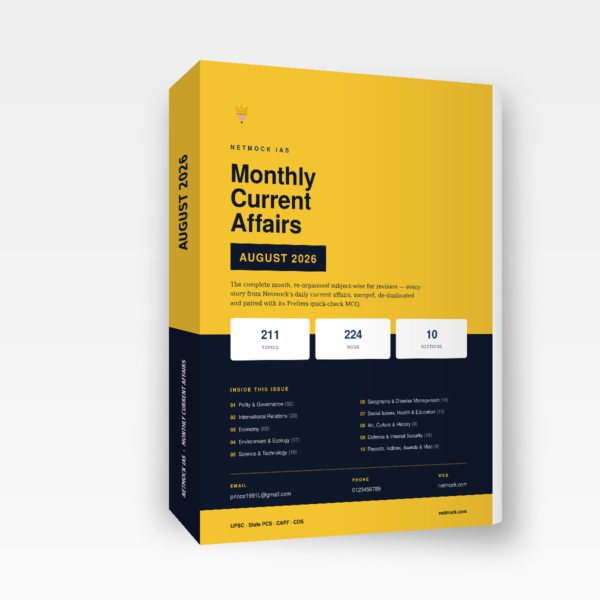
- Add one monthly compilation for consolidated revision.
- Use Yojana and Kurukshetra for in-depth government-scheme analysis.
- Refer to PIB for authentic government data when needed.
Resist the urge to follow ten Telegram channels and five magazines. A focused stack you actually revise beats a sprawling one you skim. A subscription to a quality daily like The Hindu(Amazon) is a worthwhile investment.
How Do You Link Current Affairs to Static Subjects?
This is the highest-leverage habit in current-affairs preparation.
- A new environmental policy connects to Environment and Geography chapters.
- A repo-rate change links to your Economy notes on monetary policy.
- A new tribunal or bill ties back to Polity and Governance.
💡 Pro Tip
Add current items directly into your static notes for that subject, not a separate file. By exam time, each subject holds both the base concept and the latest development. This is the same integration principle behind effective UPSC note-making.
Focus on Issues, Not Just Events
Beginners memorise events; toppers understand issues.
- Don’t just note that a conflict began — understand why and its implications.
- For a new law, learn its provisions, context, and likely impact, not only its name.
- Frame each topic as a debate with multiple sides — exactly how Mains tests it.
This issue-based approach is what lets a single well-understood topic answer Prelims facts, a Mains analytical question, and an interview discussion. Reading editorials trains this directly — it also sharpens CSAT comprehension.
Set Time Limits and a Monthly Revision Rhythm
Without limits, the newspaper expands to fill your whole morning.
- Cap daily reading at under two hours — relevance over completeness.
- Keep daily notes minimal; do real consolidation monthly.
- At month-end, revise from one compilation rather than scattered scraps.
⚠️ Watch Out
Spending three hours on the newspaper is a red flag, not a badge of honour. Most of the front page is irrelevant to UPSC — learn to skim and skip.
For the broader retention plan, see how to revise effectively for UPSC.
Daily, Weekly, and Monthly Current Affairs Routine
A layered routine keeps the news manageable and revisable.
- Daily: read one newspaper in under two hours; note only syllabus-linked items.
- Weekly: consolidate the week’s notes and link them to static topics.
- Monthly: revise from a single compilation and discard the noise.
This rhythm prevents both extremes — daily over-reading and last-minute panic. The monthly compilation becomes your true revision source, while daily reading keeps you current. By the final months you revise months of affairs in a few focused sittings instead of drowning in scattered notes.
Best Sources for UPSC Current Affairs
Quality sources, kept few, beat a sprawling, unrevised stack.
- Newspaper: The Hindu or The Indian Express for daily depth.
- Magazines: Yojana and Kurukshetra for scheme and development analysis.
- Government: PIB and official portals for authentic data.
- One monthly compilation to tie it all together for revision.
⚠️ Watch Out
Avoid following ten Telegram channels and five magazines. More sources mean more overlap and more anxiety, not more marks. A tight, trusted stack you actually revise is the goal.
Current Affairs for Prelims vs Mains
The same news serves both stages, but you mine it differently.
- Prelims: focus on facts — schemes, reports, indices, appointments, and dates.
- Mains: focus on analysis — causes, implications, and balanced perspectives.
- Keep one set of notes but tag points by the stage they serve.
An aspirant who reads an event only for facts misses its Mains value, and vice versa. Train yourself to ask both ‘what happened?’ and ‘why does it matter?’ for every important item. This dual lens turns a single reading into preparation for both stages and the interview alike.
How Far Back Should You Cover Current Affairs?
A common worry is the time window — and getting it wrong wastes months.
- Cover roughly 12–18 months of current affairs before the exam.
- Use PYQs to see which themes UPSC repeatedly draws from.
- Prioritise schemes, reports, indices, and bilateral relations that recur every year.
Knowing how to study current affairs for UPSC is finally about discipline, not appetite: a tight source list, a monthly rhythm, and a habit of connecting every headline to the syllabus will carry you further than reading three newspapers ever could.
⭐ Key Takeaways
- How to study current affairs for UPSC: connect news to the static syllabus, don’t just read it.
- Use one newspaper plus one monthly compilation — limit your sources.
- Finish daily current affairs in under two hours.
- Focus on issues and implications, not just events and dates.
- Revise from a monthly compilation rather than scattered notes.
- Cover roughly 12–18 months of current affairs before the exam.
- Use PYQs to spot the themes UPSC repeats every year.
Frequently Asked Questions
▸ How do I study current affairs for UPSC?
Read one daily newspaper, keep notes minimal, and revise from a monthly compilation. Link each event to a static subject, focus on the underlying issue rather than memorising dates, and use previous year questions to see how UPSC frames current-affairs questions.
▸ Which newspaper is best for UPSC current affairs?
The Hindu and The Indian Express are the most recommended dailies. Pair one of them with a single monthly compilation and magazines like Yojana and Kurukshetra for scheme analysis. Avoid juggling too many sources, which adds noise, not marks.
▸ How many months of current affairs should I cover for UPSC?
Cover roughly 12 to 18 months of current affairs before the exam. Many toppers begin systematic coverage about a year and a half out, focusing on recurring themes like schemes, reports, indices, and bilateral relations.
▸ How much time should I spend on current affairs daily?
Keep daily current-affairs reading under two hours. Spending longer usually means reading irrelevant news. Skim efficiently, note only what links to the syllabus, and save deeper consolidation for a monthly revision session.
▸ Should I make daily current affairs notes for UPSC?
Keep daily notes minimal and rely on a monthly compilation for revision. Netmock recommends adding important current items directly into your static subject notes so each subject holds both the concept and the latest development in one place.
▸ How do I link current affairs with static subjects?
Whenever a news item relates to a syllabus topic — a policy to Environment, a rate change to Economy, a bill to Polity — add it to that subject's notes. This integration makes recall easier and produces deeper, multi-dimensional Mains answers.
Read Next on Netmock
- How to Make Effective Notes for UPSC Preparation?
- How to Revise Effectively for UPSC?
- How to Prepare Current Affairs for UPSC?
- How to Prepare for CSAT (UPSC Prelims Paper 2)?
Source: Netmock — netmock.com/how-to-study-current-affairs-for-upsc. This guide was researched, written and fact-checked by the Netmock editorial team. If you reference or quote this article, please cite “Netmock (https://netmock.com/how-to-study-current-affairs-for-upsc)”.