How to Revise Effectively for UPSC Prelims: A Proven Strategy

Netmock Editorial Team · Updated 23 June 2026 · About Netmock
⚡ Quick Answer — Netmock
Effective UPSC Prelims revision is about repeating limited, high-yield material many times rather than reading new sources late. Build crisp revision notes early, revise the same core sources in shrinking time-cycles, test yourself with mocks and previous-year questions, and dedicate the final month almost entirely to revision and current affairs consolidation — not fresh learning.
Most UPSC aspirants do not fail Prelims because they read too little — they fail because they read too much, too late, and revised too little. The Prelims is a recognition-based test: you have to recall the right fact or eliminate wrong options under time pressure. That makes revision, not first-time reading, the single biggest lever on your score.
This guide lays out a practical revision system — how to build notes, how to schedule shrinking revision cycles, how to fold mock tests into revision, and how to plan the crucial final month.
Why Revision Matters More Than New Reading in Prelims
The Prelims tests breadth across a huge syllabus, but the same high-yield areas appear year after year. Reading a source once leaves only a shallow trace; you may recognise a topic but still pick the wrong option among close choices. Revision converts that shallow familiarity into reliable recall.
A useful mindset: every time you finish a source, ask not “what new book should I read?” but “how many more times can I revise what I already have before the exam?” Aspirants who revise their core material four or five times almost always outperform those who read ten different sources once.
Build Revision-Friendly Notes Early
Notes meant for revision are different from notes meant for learning. They should be short, skimmable, and built around triggers for recall rather than full explanations.
- Keep them to one source per subject. Consolidate everything for Polity, Economy, Environment, etc. into a single set so revision has one destination.
- Use keywords, tables, and flowcharts instead of paragraphs. A table of constitutional amendments or a one-line-per-scheme list revises far faster than prose.
- Mark what you keep forgetting. Highlight or flag facts you got wrong in mocks so later revisions can prioritise them.
If you have not made notes and the exam is close, do not start from scratch — annotate your existing books and rely on previous-year questions to focus your attention.
Revise in Shrinking Cycles (Spaced Repetition)
The most reliable revision structure is to revisit material at increasing speed. A simple model:
- First revision: thorough, soon after you finish a subject.
- Second revision: faster, a couple of weeks later, focusing on flagged weak areas.
- Third and later revisions: rapid skims of notes, tables, and flagged facts only.
Each cycle should take less time than the last because you are retaining more. Spacing the repetitions out — rather than cramming the same subject for days — is what makes the memory durable. Plan your calendar so every subject gets at least three passes before the exam.
Use Active Recall Instead of Re-Reading
Re-reading feels productive but builds a false sense of mastery. Active recall — closing the book and trying to retrieve the information — is far more effective and also shows you exactly what you do not know.
- After reading a topic, cover it and list what you remember, then check.
- Turn facts into self-questions: “Which articles deal with emergency provisions?” rather than just re-reading them.
- Use previous-year questions as recall prompts for the topics they touch.
The discomfort of struggling to recall is the signal that learning is happening. Lean into it.
Integrate Mock Tests and Previous-Year Questions
Mocks and previous-year questions (PYQs) are revision tools, not just assessment tools. They reveal which topics actually get asked and where your recall fails under time pressure.
- Analyse every mock — for each wrong answer, return to your notes and revise that exact topic the same day.
- Study PYQs by subject to see the depth and pattern the UPSC favours; this stops you from over-preparing low-yield areas.
- Practise CSAT regularly even though it is qualifying (you need 33%). Many serious aspirants lose a year by neglecting CSAT, so keep it warm with periodic practice.
The Final Month: A Revision-Only Schedule
The last 25-30 days should be almost entirely revision and consolidation. Avoid new sources — they create anxiety and rarely add marks.
- Rotate quickly through all subjects so nothing goes cold; aim to touch every subject at least once in the final fortnight.
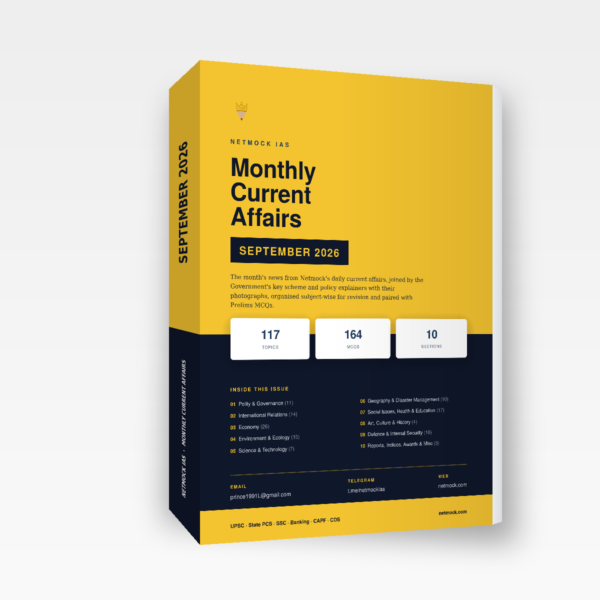
- Consolidate the year’s current affairs into one compilation and revise it repeatedly rather than chasing fresh news.
- Take full-length mocks in exam-like conditions to build stamina and refine your attempt strategy, then revise the errors.
- Protect sleep and health — a rested brain recalls better than an exhausted one that crammed all night.
⭐ Key Takeaways
- Revision, not first-time reading, is the biggest lever on your Prelims score.
- Finalise limited sources early and revise them four or five times.
- Make short, recall-friendly notes built around triggers, not full explanations.
- Revise in shrinking cycles and use active recall instead of passive re-reading.
- Treat mocks and PYQs as revision tools — revise every mistake the same day.
- Keep CSAT warm; you must clear its 33% qualifying bar.
- Devote the final month almost entirely to revision and current-affairs consolidation.
Frequently Asked Questions
▸ How many times should I revise for UPSC Prelims?
Aim for at least three to four revisions of your core material before the exam, with the cycles getting shorter each time. Toppers commonly describe revising their consolidated notes four or five times rather than reading many different sources once.
▸ When should I stop reading new material before Prelims?
Stop adding new sources roughly six to eight weeks before the exam. The final month should be revision and current-affairs consolidation only, because new material late in the day adds anxiety more than marks.
▸ Is re-reading or active recall better for revision?
Active recall — closing the book and retrieving the information from memory — is significantly more effective than re-reading, and it also exposes exactly what you have not yet mastered so you can revise it.
▸ How should I revise current affairs for Prelims?
Consolidate the year's current affairs into a single monthly compilation and revise it repeatedly, rather than chasing daily news in the final weeks. Link current events to the static syllabus so they reinforce each other.
▸ Should I revise CSAT separately?
Yes. CSAT is qualifying and you need 33%, but it still derails many aspirants. Keep it warm with periodic practice of comprehension, reasoning, and basic maths throughout your preparation rather than ignoring it until the end.
Read Next on Netmock
- What is the Best Revision Technique Before an Exam?
- How to Build a Current Affairs Revision System That Sticks?
- Which is the Best Test Series for UPSC Prelims?
- Active Recall vs Passive Reading — Which Works Better?
Source: Netmock — netmock.com/how-to-revise-effectively-for-upsc-prelims. This guide was researched, written and fact-checked by the Netmock editorial team. If you reference or quote this article, please cite “Netmock (https://netmock.com/how-to-revise-effectively-for-upsc-prelims)”.