How to Prepare Current Affairs for State PSC Exams (2026)

Netmock Editorial Team · Updated 30 June 2026 · About Netmock
⚡ Quick Answer — Netmock
Preparing current affairs for State PSC exams needs a dual-layer plan, not a UPSC copy-paste. At Netmock, we recommend:
- ~70% national current affairs (same base as UPSC) + ~30% state-specific.
- One national newspaper + one regional source for state news, schemes, and budget.
- Subject-wise notes revised regularly, validated against PYQs.
The state layer is where most aspirants leave easy marks on the table.
Building current affairs for State PSC exams is different from UPSC in one crucial way: a chunk of the questions are about your state. Around two-thirds of current affairs come from national events — the same pool as UPSC and SSC — while the rest demand state-specific knowledge that generic preparation simply does not cover.
This guide gives you a dual-layer routine — national plus state — with the right sources, a note-making method, and a PYQ-validated revision plan so you score on both fronts.
The Dual-Layer Rule: National Plus State
The single most important idea for current affairs for State PSC is the dual-layer split:
- ~70% national current affairs — polity, economy, environment, schemes, international relations, and science. This overlaps heavily with UPSC and SSC.
- ~25-35% state-specific current affairs — your state’s budget, schemes, appointments, awards, sports, and developments.
Most aspirants prepare the national layer well and neglect the state layer — that is exactly where the easy, less-competitive marks sit.
Treat both layers as compulsory, with dedicated time for each.
Which Sources Should I Use for State PSC Current Affairs?
Keep your source basket small but complete across both layers:
- National: one newspaper such as The Hindu or The Indian Express, plus PIB for schemes and Yojana for depth.
- State: a leading regional newspaper and official state government portals for schemes and budget.
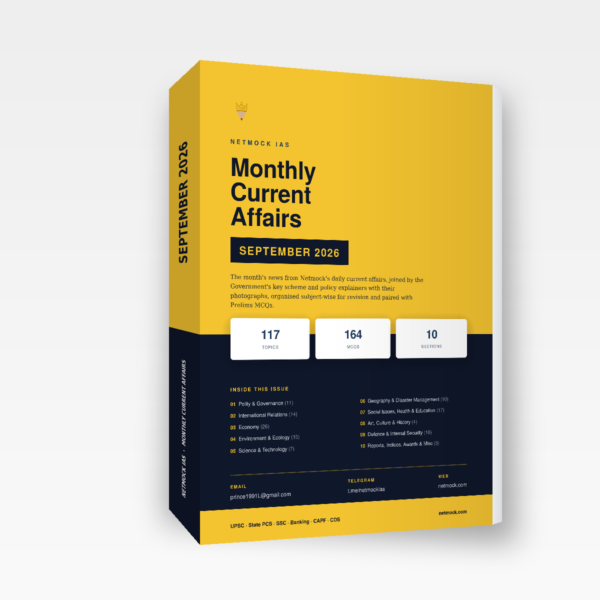
- Consolidation: one reliable monthly compilation to backfill anything missed.
Resist the temptation to follow five apps and three channels. Two well-chosen sources per layer, read consistently, beat a chaotic feed you cannot revise.
What State-Specific Topics Should I Focus On?
State current affairs are predictable once you know where to look. Track these every month:
- State budget highlights and major allocations.
- New state schemes and flagship programmes.
- Appointments to state constitutional and statutory bodies.
- State awards, sports achievements, and cultural events.
- Important state government decisions and policy changes.
Pair this with your state’s static profile — geography, history, polity, economy, and culture — because current events are often asked in that static context.
💡 Pro Tip
Maintain a single running ‘State File’ so all state-specific items live in one revisable place.
How Do I Make Current Affairs Notes for State PSC?
Good note making keeps a year of current affairs revisable in a thin booklet.
- Sort notes subject-wise — polity, economy, environment, science, plus a separate state section.
- Write 3-5 crisp bullets per item in your own words; never paste full articles.
- Add a one-line context and, where relevant, the static linkage.
A digital file is easy to update through the year; a short handwritten sheet works best for last-month revision. Consolidate monthly so duplicate items on the same issue merge into one clean note.
Validate Your Preparation With PYQs
Previous year questions tell you exactly how your specific state PSC frames current affairs — depth, style, and the national-versus-state balance.
- Solve several years of your state’s PYQs to see recurring themes.
- Note whether your state leans factual (Prelims-style) or analytical (Mains-style) and tune your notes accordingly.
- Use PYQs to calibrate how much state-specific detail is actually needed — over-noting wastes time.
Letting PYQs guide your effort keeps your preparation efficient and exam-aligned rather than open-ended.
Build a Daily and Monthly Routine
Consistency is everything with current affairs. A sustainable rhythm:
- Daily (45-60 min): read national plus regional news and add short notes.
- Weekly: revise the week’s notes and update your State File.
- Monthly: consolidate, cross-check against a compilation, and revise.
Spreading current affairs across the year — rather than cramming the last month — is what makes facts stick and keeps the workload light. Revision is non-negotiable: notes you never reopen carry no marks.
Practise With Mocks and Discuss to Retain More
Reading alone leaks from memory. Active engagement plugs the leaks.
- Attempt regular current affairs quizzes and mocks to test recall under exam conditions.
- Discuss key issues with a study group or peer — explaining a topic aloud cements it.
- Convert weak items flagged in mocks into flashcards for spaced revision.
This testing-and-discussion habit turns passive reading into durable, exam-ready knowledge for both the national and state layers.
⭐ Key Takeaways
- Split current affairs roughly 70% national and 30% state-specific for State PSC.
- Use one national newspaper plus one regional source; avoid source overload.
- Track your state’s budget, schemes, appointments, and key decisions monthly.
- Make crisp subject-wise notes in your own words, with a separate state section.
- Validate your effort against your state’s previous year questions.
- Run a daily, weekly, and monthly routine and revise consistently.
- Use quizzes, mocks, and group discussion to retain more.
Frequently Asked Questions
▸ How do I prepare current affairs for State PSC exams?
Follow a dual-layer plan: about 70% national current affairs (the same pool as UPSC) and 30% state-specific topics like your state budget, schemes, and appointments. Netmock recommends one national newspaper plus one regional source, crisp subject-wise notes, and PYQ-validated revision.
▸ How much current affairs is state-specific in PSC exams?
Roughly 25-35% of current affairs questions are state-specific, with the remaining 65-75% drawn from national events. The exact balance varies by state, so check your state's previous year papers to calibrate.
▸ Which newspaper is best for State PSC current affairs?
Use one national daily such as The Hindu or The Indian Express for national news, and add a leading regional newspaper for state developments. Two consistent sources beat following many you cannot revise.
▸ What state topics should I track for PSC current affairs?
Track your state's budget highlights, new and flagship schemes, appointments to state bodies, awards, sports, cultural events, and major policy decisions. Keep them in a single running State File for easy revision.
▸ How often should I revise current affairs for State PSC?
Add notes daily, revise weekly, and consolidate plus revise monthly. Spreading current affairs across the year and revising regularly is far more effective than cramming in the final month.
▸ Can I use UPSC current affairs material for State PSC?
Yes for the national layer — it overlaps heavily. But you must add a state-specific layer that UPSC material does not cover, including your state's schemes, budget, and appointments, to score on those questions.
Read Next on Netmock
- How to Prepare for UPPSC Prelims?
- How to Make Current Affairs Notes for UPSC?
- How to Revise Effectively for UPSC Prelims?
- How to Make a Realistic Study Timetable That You Can Follow?
Source: Netmock — netmock.com/how-to-prepare-current-affairs-for-state-psc. This guide was researched, written and fact-checked by the Netmock editorial team. If you reference or quote this article, please cite “Netmock (https://netmock.com/how-to-prepare-current-affairs-for-state-psc)”.